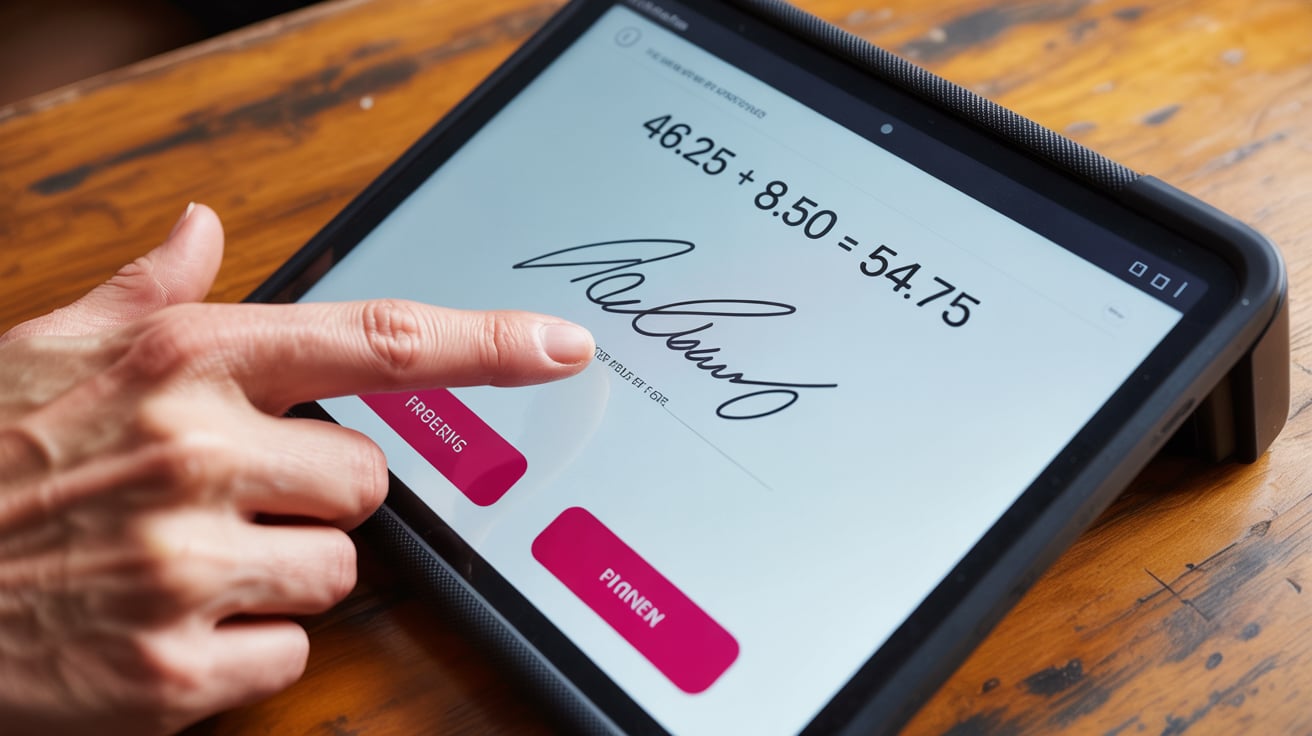
Americans appear to be getting more comfortable saying “no” when a checkout screen asks for a tip.
A new Talker Research study, as cited in the source material, found that consumers reported spending 38% less on so-called “guilt tipping” in 2025 than they did a year earlier. The phrase describes the uncomfortable pressure many shoppers feel when a digital point-of-sale screen asks for a gratuity — sometimes in situations where customers do not believe the service calls for one.
For many consumers, tipping has shifted from a reward for good service into a way to avoid an awkward moment at the counter.
## The ‘Guilt Tax’ Is Still Real
According to Talker Research, the average respondent said they give about $24 more per month than they believe is fair because of tipping pressure.
That works out to roughly $283 per year in 2025. The figure is still significant for many households, but it is down from the reported $450 annual amount in 2024.
The survey of 2,000 people also found that respondents now say they tip out of guilt just over four times per month, compared with more than six times per month last year.
About one in five participants said they “always or often” tip more than they would like because they feel guilty. Nearly 30% said they rarely or never feel that pressure.
## Digital Screens Are Driving the Frustration
One major source of irritation is the growing presence of preset tip prompts on payment screens.
The study found that 37% of respondents noticed higher suggested tipping percentages. Nearly half had already noticed that trend last year, according to the source material.
That matters because the decision happens in public, often while an employee is nearby and other customers are waiting. Even a quick transaction can become a social test.
## Higher Costs Are Changing Consumer Behavior
The cost-of-living squeeze appears to be reshaping tipping habits.
According to the survey, 45% of respondents said they have cut back on tipping altogether. Another 22% said they now tip less across the board.
Only 11% said they are tipping more now. Nearly half of that group said they are doing so to support service workers.
That point reflects the tension at the center of the debate: consumers are tired of feeling pressured, but many service workers depend heavily on tips.
## Who Should Pay Workers More?
The source material says most respondents believe employers should be responsible for paying workers a fair wage rather than shifting that burden to customers.
That view has become more common as tip prompts spread beyond traditional table-service restaurants into coffee shops, takeout counters, bakeries, food halls and other quick-service settings.
At the same time, workers in tipped occupations may see tips as essential income, not a bonus. That makes the issue more complicated than a simple fight between customers and employees.
## New Tax Law Adds Another Factor
The findings come after the One Big Beautiful Bill Act, or OBBBA, was signed into law on July 4, according to the source material.
The measure allows tipped workers in more than 60 occupations to deduct up to $25,000 in tips from taxable income between 2025 and 2028.
Eligible roles listed in the source include wait staff, bartenders, cooks, dishwashers, cafeteria attendants, bakers and hosts.
The tax provision could ease some financial pressure for workers who rely on tips. But it does not appear to be changing how many customers feel when a screen asks them to add 20%, 25% or more at checkout.
For now, the trend reported by Talker Research is clear: Americans are still tipping, but many are becoming more selective — and less willing to pay what they see as a guilt-driven surcharge.